Total Knee Replacement Surgery in Bristol

Sven Putnis offers advanced total knee replacement surgery in Bristol. Discover individualised, precision-planned joint replacement for severe osteoarthritis.

Overview

A total knee replacement is a highly successful, life-changing procedure recommended when the knee joint has sustained global, widespread damage. This is most commonly caused by the progressive wear and cartilage destruction of end-stage osteoarthritis. Other conditions such as following trauma, or inflammation conditions like rheumatoid arthritis can also be the cause of progressive cartilage damage. Sven Putnis specialises in advanced total knee replacement surgery in Bristol. Before considering surgery, it is essential to ensure that non-operative measures—such as physiotherapy, weight management, and targeted joint injections—have been thoroughly explored. When conservative treatments are no longer effective, replacing the entire joint can significantly reduce pain and restore mobility.
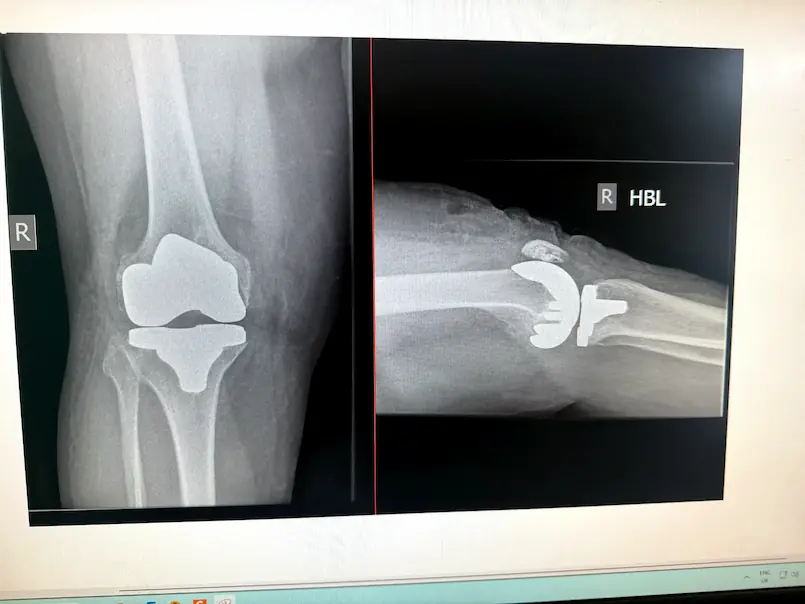
Totalkneereplacementx Ray Enhanced (1)

The Procedure

  • Comprehensive clinical assessment and exploration of non-operative options
  • Advanced pre-operative imaging of both legs to map natural anatomy and guide implant positioning
  • Meticulous surgical planning to recreate the individualised joint alignment
  • Surgical removal of damaged cartilage and underlying bone
  • Precise bone cuts guided by manual instrumentation or robotic assistance
  • Use of two different antibacterial agents to reduce risk of infection
  • Implantation of highly durable metal femoral and tibial components and plastic tibial insert
  • Decision regarding the need for additional patella resurfacing with a plastic button
  • Fully absorbable layered, water-tight suture (stitch) closure
  • Use of intra-articular Transexamic Acid (TXA) for ongoing prevention of bleeding into the knee and post-operative swelling

Benefits

  • Significantly reduces or eliminates severe, debilitating knee pain
  • Restores joint mobility and function for a return to an active lifestyle
  • Highly individualised pre-operative planning maximises chance of a natural-feeling joint
  • Utilises incredibly hard-wearing, medical-grade implant materials
  • High long-term success rates (>80% functioning well after 25 years)
  • Option for millimetre precision with robotic-assisted techniques
  • Comprehensive, phased rehabilitation support for optimal recovery

Who Is This For?

  • Patients with end-stage osteoarthritis affecting multiple knee compartments
  • Individuals suffering from severe, debilitating knee pain and stiffness
  • Post-traumatic progressive cartilage destruction
  • Patients with destructive inflammatory conditions (e.g., rheumatoid arthritis)
  • Those who have exhausted non-operative treatments (physiotherapy, injections)
  • Individuals whose pain significantly limits daily activities and quality of life
  • Patients seeking a long-term, durable solution for global joint damage

Recovery Timeline

  • First 2 weeks

    The most important aspects of the initial recovery are controlling swelling in the knee, preventing muscle wasting, and working towards regaining full range of knee motion

    • Full weight bearing as tolerated with crutches
    • Knee elevation up to the level of the heart and full ankle movements to activate calf muscles
    • Cryotherapy such as ice and cold presses to reduce inflammation, pain and swelling
    • Bulky dressing can be reduced the day after surgery, the adhesive dressing is splashproof for careful washing/showering. Dressings can be touched and surrounding tissue massaged
    • Start to work towards regaining full range of movement
    • Activate the quadriceps muscles to try and lift the leg and push the knee out straight
    • Work through the exercise physiotherapy instruction sheets
  • Weeks 2-6
    • The dressing should have been removed by 2 weeks. After this a face-to-face physiotherapy session can be useful
    • Swelling is still expected so continue elevation and cryotherapy
    • Continue to regain full range of movement, especially once swelling has settled, and ensure that you are getting the knee as fully straight as possible and bending beyond 90 degrees
    • Scar massage and multidirectional patella mobilisation can help to prevent adherence
    • It is likely you will need crutches throughout this period but once normal gait (walking without a limp) has been achieved these can be stopped, ensure core strength and gluteal muscles are controlling pelvic tilt and stability
    • The earliest to drive a car safely is after 4 weeks; you need to ensure you are off strong pain medication and have demonstrated safety to a responsible passenger
  • Weeks 6-12
    • Clinical review in Outpatient Clinic with Sven Putnis
    • You should start to notice the clear benefit of the total knee replacement
    • Hydrotherapy or light swimming
    • Exercise bike – initially resistance free and gradually build from there
    • Gym type strengthening activities based on your own level of function and goals
  • 3-12 months
    • You can expect ongoing improvement throughout the first post-operative year. Optimal range of knee motion is expected by approximately 6 months, dependent on a number of factors and is directly related to your pre-operative knee movement.
    • It is safe to build up your level of activities and test out your knee replacement but it makes sense to avoid activities that cause pain, and those that have an increased risk of falls as bone fractures or ligament ruptures can occur around a knee replacement.
    • It is routine but not essential to have a one-year surgical follow-up with a baseline x-ray.
  • 1-year and onwards
    • Be guided by your knee replacement and the level of function that you want to do in life.
    • There is no current evidence that having a high physical activity level after a total knee replacement increases your risk of needing revision surgery when studied during the first 12 years after surgery.

Frequently Asked Questions

How long does a total knee replacement last?

Modern knee replacements are incredibly durable. Large-scale clinical registries and studies indicate that more than 90% of total knee replacements are still functioning well after 15 years, and approximately 82% continue to function well after 25 years 2.

Pain management is a critical part of the recovery process. You will experience post-operative pain, but this is carefully managed with a combination of medications. The immediate joint pain caused by arthritis is usually relieved very quickly, while the surgical pain gradually subsides over the first few weeks as the tissues heal.

Most patients can return to driving between 4 and 6 weeks post-surgery, provided they are no longer taking strong painkillers and can comfortably perform an emergency stop. Returning to work depends heavily on your occupation; desk-based roles may be possible after 4 to 6 weeks, while physically demanding jobs will require significantly longer.

Following a successful recovery, patients are encouraged to return to low-impact sports such as swimming, cycling, golf, and brisk walking. High-impact sports involving heavy running or jumping are generally discouraged, as they can accelerate the wear of the plastic bearing surface.

Physiotherapy is absolutely essential for a successful outcome. The surgery provides the new joint, but it is the dedicated rehabilitation that restores strength, flexibility, and a normal walking pattern. A structured physiotherapy programme must be followed diligently in the months following surgery.

Treatment Details

Recovery Time

6–12 weeks (for normal daily activities)

Success Rate

Very high (>80% implant survivorship at 25 years)

Ready to Get Started?

Book a consultation to discuss if this treatment is right for you.

  • 15+ years specialist orthopaedic experience
  • National Joint Registry 10 year data is the best in the UK
  • Expertise in advanced 3D pre-operative planning and kinematics
  • Proficiency in both manual and robotic-assisted surgical techniques
  • Commitment to individualised anatomy recreation

Ready to Take the Next Step?

Book your consultation today and begin your journey to recovery with expert knee care in Bristol.