Sven Putnis provides expert partial knee replacement surgery in Bristol, offering rapid pain relief, faster recovery, and preserved joint function for osteoarthritis.
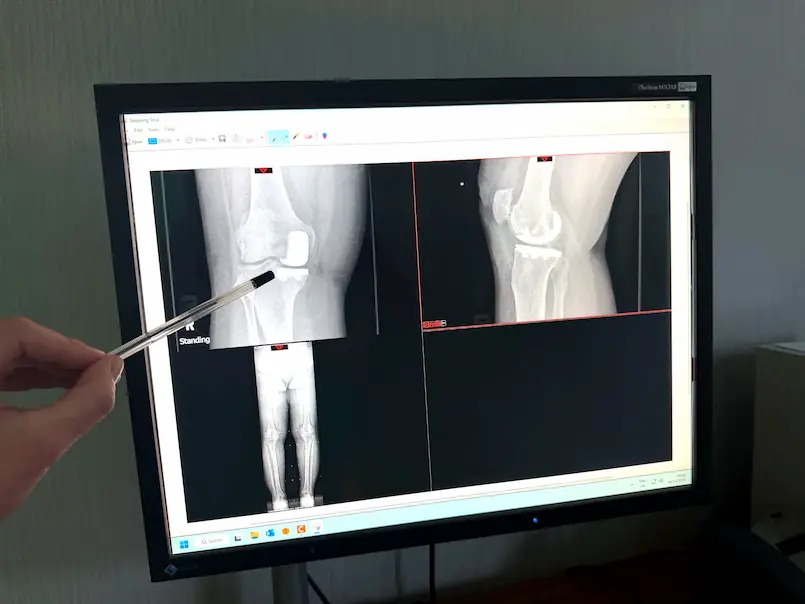
The knee joint consists of three distinct compartments: the inside (medial), the outside (lateral), and the front (patellofemoral). Osteoarthritis is when the protective cartilage wears away. If this occurs in just one of these areas, it causes severe, localised pain. A partial knee replacement (unicompartmental knee arthroplasty or UKA) is an advanced, targeted surgical procedure designed to replace only the damaged section of the joint. By preserving the healthy bone, cartilage, and crucial stabilising ligaments, Sven Putnis provides patients with a faster recovery, superior joint function, and a rapid return to an active lifestyle compared to traditional total knee replacement surgery.
Who Is This For?
First 2 weeks
The most important aspects of the initial recovery are controlling swelling in the knee, preventing muscle wasting, and working towards regaining full range of knee motion
Suitability depends on the location and severity of your osteoarthritis. You may be a candidate if your arthritis is confined to a single compartment, you have largely intact knee ligaments, and you do not have severe inflammatory arthritis (such as rheumatoid arthritis). A thorough history, clinical examination and imaging will confirm your eligibility.
Modern partial knee replacements are highly durable. Clinical data indicates that good or excellent functional outcomes can be expected in over 80% of patients, with a National Joint Registry (NJR) survivorship rate of approximately 93% at 15 years with the most common medial implant that Sven Putnis uses (cemented, fixed bearing UKA)
While the goal is to provide a long-lasting solution, osteoarthritis can occasionally progress to the preserved compartments of the knee over time. With accurate diagnosis and modern balancing techniques unworn areas should not worsen. If this occurs and becomes symptomatic, the partial replacement can be successfully revised to a primary total knee replacement.
Because the surgery is less invasive than a total knee replacement, post-operative pain is generally much lower. Mobilisation is quicker and that can prevent secondary pain generators. Sven Putnis utilises advanced pain management protocols, and most patients find their discomfort is well-controlled with standard oral medications during the early recovery phase.
Patients can typically resume low-impact sports, such as swimming and cycling, within 6 to 12 weeks. A return to more dynamic activities should be guided by your physiotherapist, but the preserved natural biomechanics of the knee often allow for a higher level of sporting function than a total knee replacement. If desired, a specialist physiotherapy return to running programme can be arranged.
Recovery Time
3–6 weeks (for normal daily activities)
Success Rate
High (91% survivorship at mid-term follow-up)
Book a consultation to discuss if this treatment is right for you.
Book your consultation today and begin your journey to recovery with expert knee care in Bristol.