Patella Stabilisation Surgery in Bristol

Sven Putnis offers expert patella stabilisation surgery in Bristol, including MPFL reconstruction and tibial tubercle osteotomy for recurrent dislocations.Sven Putnis offers expert patella stabilisation surgery in Bristol, including MPFL reconstruction and tibial tubercle osteotomy for recurrent dislocations.

Overview

The patella (kneecap) sits within a groove at the front of the knee, known as the trochlea. Together they form the patellofemoral joint. A dislocation occurs when the kneecap is forced entirely out of this groove. While a first-time dislocation is often successfully managed with conservative physiotherapy, recurrent dislocations or chronic instability require surgical intervention. Sven Putnis provides comprehensive, evidence-based management for patellar instability, utilising advanced imaging and highly individualised surgical plans to restore stability and prevent long-term damage to the joint cartilage.
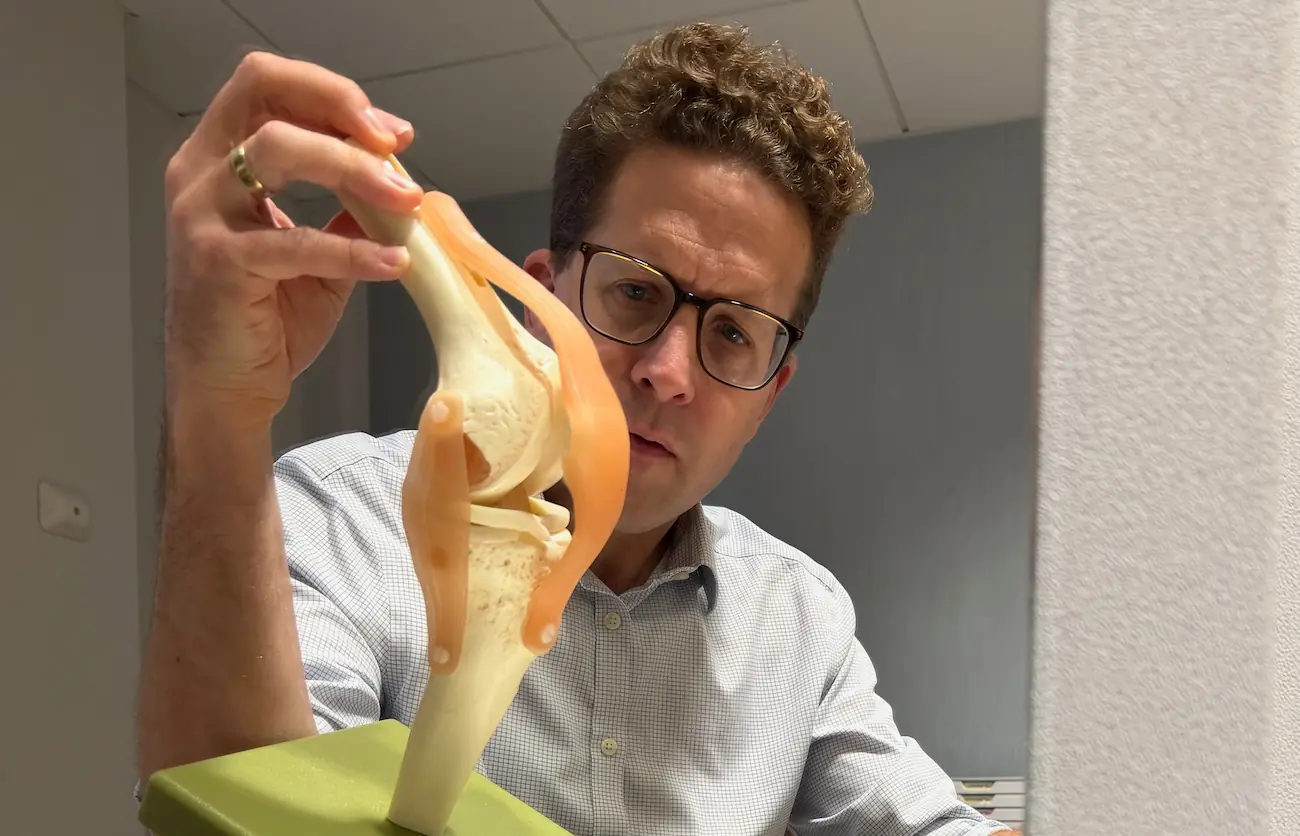
Patella Stabilisation

The Procedure

  • Detailed clinical assessment and advanced imaging (X-rays/MRI)
  • Identification of underlying anatomical risk factors (e.g., MPFL rupture, trochlea dysplasia, patella alta, patella tilt, lateral conflict)
  • Formulation of a highly individualised surgical plan
  • Initial arthroscopy (keyhole surgery) to assess tracking and cartilage damage
  • Stabilisation procedure
    • Medial Patellofemoral Ligament (MPFL) Reconstruction: A tendon from the inside of the thigh (free autograft) is taken and used to reconstruct the ligament on the inside of the patella. The graft is made of two arms and fixed through sockets in the bone. The graft is tensioned using an adjustable suspensory loop which can accurately reproduce the native patella laxity. Finally the graft is held with screw-free fixation for lower hardware related complications rates.
    • Tibial Tubercle Osteotomy (TTO): The area of bone on the front of the tibia (shin bone) where the patella tendon attaches is cut with precision and moved downwards, pulling the patella with it. The bone is then fixed in its new bed using a permanent low profile plate with bone screws.

Benefits

  • Reliably restores long-term stability to the patellofemoral joint
  • Prevents recurrent dislocations and chronic apprehension
  • Protects the delicate joint cartilage from further traumatic damage
  • MPFL reconstruction boasts exceptionally low recurrent dislocation rates (<2%)
  • Highly individualised surgical plans address specific anatomical abnormalities
  • Facilitates a confident return to athletic participation and daily activities
  • Integrated with specialist physiotherapy for optimal functional recovery

Who Is This For?

  • Patients experiencing recurrent patellar (kneecap) dislocations
  • Individuals with chronic, ongoing kneecap instability (often since teenage years)
  • Patients who have failed conservative (non-operative) physiotherapy
  • Those with confirmed anatomical risk factors (e.g., MPFL rupture, patella alta)
  • Individuals experiencing apprehension or a “giving way” sensation

Recovery Timeline

  • First 2 weeks

    The most important aspects of the initial recovery are controlling swelling in the knee, preventing muscle wasting, and working towards regaining full range of knee motion

    • Full weight bearing as tolerated with crutches
    • Knee elevation up to the level of the heart and full ankle movements to activate calf muscles
    • Cryotherapy such as ice and cold presses to reduce inflammation, pain and swelling
    • Bulky dressing can be reduced the next day, adhesive dressings are splashproof for careful washing/showering. Dressings can be touched and surrounding tissue massaged
    • Start to work towards regaining full range of movement
    • Active quads recruitment without resistance – push your knee down into the bed
    • Active hamstring recruitment without resistance
    • Multidirectional patella mobilisation
    • Proprioceptive and balance exercises
    • Core stability and gluteal hip exercises
    • Contralateral leg exercises – there is evidence that working on the non-operative leg improves both legs
  • Weeks 2-6
    • All dressings should have been removed by 2 weeks.
    • When all surgical incisions have healed, hydrotherapy can begin if required; it may be most useful if there is difficulty with the gradual return of full knee range of motion over the first 8 weeks.
    • Swelling is still common so continue elevation and cryotherapy
    • Once normal gait (walking without a limp) has been achieved walking aids can be stopped, ensure core strength and gluteal muscles are controlling pelvic tilt and stability
    • Continue to regain full range of movement especially once swelling has settled
    • Scar massage can help to prevent adherence
    • Multidirectional patella mobilisation
    • Closed chain quadriceps: double leg wall mini squats, sit to stand, single leg work, lunges (onto a step if PFJ pain problematic)
    • Once quad control is achieved, open chain quad exercises are permitted – proven to help prevent a delay in strengthening. Start without resistance. There is increasing evidence that a delay in open-chain exercises leads to longer term muscle weakness.
    • The twitch time for muscle group activation is important to start considering
    • Proprioceptive work should start early, allowing precise control of open-chain exercises
  • Weeks 6-12
    • Clinical review in Outpatient Clinic with Sven Putnis
    • An x-ray on arrival if you have had a Tibial Tubercle Osteotomy (TTO)
    • Returning to full-time work with adaptations for manual jobs
    • Increased intensity with closed chain quads and gluts
    • Gradually introduce controlled resistance in open chain quad exercises
    • Resisted hamstrings from 8 weeks
    • Ensure maximum range of movement including symmetrical deep flexion and hyperextension has been achieved. Often deepest flexion is missed.
    • Start regular gym work (walking on a treadmill/rowing/spinning/step climber/leg press)
    • Light pool exercises and swimming
    • Start on an exercise bike – initially resistance free and gradually build from there
    • Light jogging on the spot or on a trampette
  • Weeks 12-18
    • A repeat x-ray if you have had a TTO to ensure full bone healing
    • Continue fitness/ aerobic work
    • Continue proprioceptive control work
    • Commence a return jogging and running programme ensuring good eccentric quads control and ability to control repetitive single leg hops
    • Ensure limb symmetry as straight line jogging becomes easier and more natural
    • Gradual increase impact work
    • Unilateral on trampette, hops/lateral hops/ z hops/ landing/skipping
  • 4-6 months
    • If muscle strength and control is suitable, treadmill jogging can start and gradually build up in intensity
    • Floormat dynamic movements such as backwards walking and jogging, cone slalom and wide turns progressing to tighter turns
  • 6-9 months
    • Sports specific training can begin and will be determined by individual goals
    • Downhill jogging
    • Ball kicking
    • Non-contact training sessions
    • All swimming strokes with increasing distance and duration
  • 9 months +
    • Achieve 90% symmetry on strength and return to sport battery of tests if available
    • Assessment of hamstring/quadriceps ratio
    • Return to full function

Frequently Asked Questions

Do I need surgery after my first kneecap dislocation?

Usually, no. The majority of first-time patellar dislocations are treated successfully without surgery. A period of rest in a brace followed by a dedicated physiotherapy programme to strengthen the surrounding muscles is often enough to restore stability. The ruptured MPFL usually heals well. Surgery is generally reserved for those who experience recurrent dislocations.

The Medial Patellofemoral Ligament (MPFL) is a band of tissue on the inside of the knee that acts as a tether, preventing the kneecap from sliding too far to the outside. It is always torn during a dislocation but usually heals. Reconstructing it is the most reliable way to restore primary stability to the kneecap after recurrent dislocations.

Recovery is a gradual process. You will likely need to wear a brace and use crutches for the first few weeks. Driving is usually possible around 4 to 6 weeks post-surgery, depending on which leg was operated on. A full return to sports and strenuous activities typically requires 6 to 9 months of dedicated physiotherapy.

During the final phases of skeletal development the patella can end resting higher in the trochlea groove. This is a normal variant but puts the patella at an increased risk of dislocation and the development of osteoarthritis. A Tibial Tubercle Osteotomy pulls the patella tendon down and in turn allows the patella to sit stable in its groove throughout full range of motion.

Yes. While the arthroscopy uses very small keyhole incisions, the MPFL reconstruction requires small incisions on the side of the knee to secure the new ligament. If a Tibial Tubercle Osteotomy is performed, a slightly larger incision is required on the front of the shin to reposition the bone.

While no surgery carries a 100% guarantee, modern stabilisation techniques are highly successful. Studies show that when an MPFL reconstruction is performed on correctly selected patients, the risk of a recurrent dislocation is exceptionally low, typically falling below 2% 1.

Treatment Details

Recovery Time

4–6 months (for full return to sport)

Success Rate

Very high (recurrent dislocation rate <2% for MPFL reconstruction)

Ready to Get Started?

Book a consultation to discuss if this treatment is right for you.

  • 15+ years specialist orthopaedic experience
  • Expertise in complex, multi-factorial patellar instability
  • Proficiency in both soft tissue (MPFL) and bony (TTO) procedures
  • Innovative graft tensioning and low profile fixation for MPFL reconstruction to minimise complications
  • Collaborative network for rare procedures (e.g. Trochleoplasty, revision reconstruction)

Ready to Take the Next Step?

Book your consultation today and begin your journey to recovery with expert knee care in Bristol.