Realignment Osteotomy in Bristol

Sven Putnis offers expert realignment osteotomy surgery in Bristol. Discover advanced joint-preserving treatment for osteoarthritis driven by leg bowing.

Overview

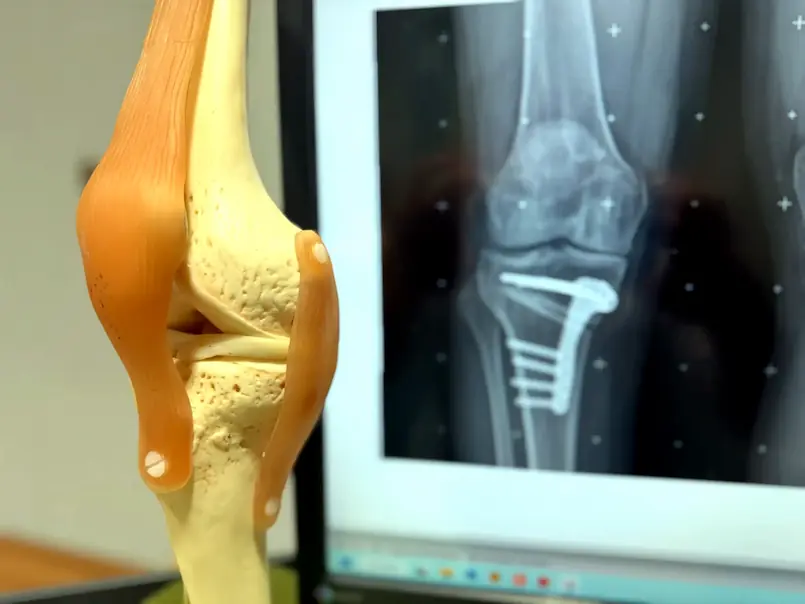
Realignment osteotomy is a highly specialised, joint-preserving surgical procedure designed for patients with moderate to severe knee osteoarthritis that is driven by an abnormal bend or “bow” in the leg. When a leg is bow-legged (varus) or knock-kneed (valgus), it places excessive, uneven pressure on one side of the knee joint, accelerating cartilage wear. Instead of replacing the joint, an osteotomy involves making a precise surgical cut in the bone to correct this alignment.

By shifting the body’s weight away from the damaged, arthritic area and onto the healthy cartilage, this procedure can significantly relieve pain, restore function, and delay the need for a partial or total knee replacement by many years.
Realignmentosteotomy Enhanced (1)

The Procedure

  • Comprehensive clinical assessment and full-leg standing X-rays to calculate exact alignment angles
  • Pre-operative planning to determine the precise degree of correction required
  • A precise surgical cut (osteotomy) is made in the tibia (shin bone) or femur (thigh bone)
  • The bone is carefully opened (or a wedge is removed) to achieve the planned alignment
  • The new, corrected position is securely fixed in place using a specialised, low-profile titanium plate and screws
  • The bone heals naturally in its new, straighter position over the following weeks

Benefits

  • Preserves your natural knee joint, ligaments, and cartilage
  • Significantly reduces pain by offloading the damaged arthritic compartment
  • Allows for a return to high-impact activities and heavy manual labour (unlike joint replacements)
  • Restores a more natural feeling knee mechanics and proprioception
  • Can delay the need for a partial or total knee replacement by 10 to 15 years
  • Corrects visible leg bowing or knock-knee deformities
  • Maintains full range of motion in the knee joint

Who Is This For?

  • Younger, active patients (typically under 65) with unicompartmental osteoarthritis
  • Individuals with a calculated “bow-legged” (varus) or “knock-kneed” (valgus) alignment
  • Patients who wish to continue high-impact sports (running, skiing) or heavy physical work
  • Those who have healthy cartilage in at least one compartment of their knee
  • Individuals with intact knee ligaments (or those undergoing simultaneous ligament reconstruction)
  • Patients who are not yet ready for, or are too young for, a knee replacement

Recovery Timeline

  • First 2 weeks

    The most important aspects of the initial recovery are controlling swelling in the knee, preventing muscle wasting, and working towards regaining full range of knee motion

    • Full weight bearing as tolerated with crutches
    • Knee elevation up to the level of the heart and full ankle movements to activate calf muscles
    • Cryotherapy such as ice and cold presses to reduce inflammation, pain and swelling
    • Bulky dressing can be reduced the next day, adhesive dressings are splashproof for careful washing/showering. Dressings can be touched and surrounding tissue massaged
    • Start to work towards regaining full range of movement
    • Active quads recruitment without resistance – push your knee down into the bed
    • Active hamstring recruitment without resistance
    • Proprioceptive and balance exercises
    • Core stability and gluteal hip exercises
    • Contralateral leg exercises – there is evidence that working on the non-operative leg improves both legs
  • Weeks 2-6
    • All dressings should have been removed by 2 weeks.
    • When all surgical incisions have healed, hydrotherapy can begin if required; it may be most useful if there is difficulty with the gradual return of full knee range of motion over the first 8 weeks.
    • Swelling is still common so continue elevation and cryotherapy
    • Once normal gait (walking without a limp) has been achieved walking aids can be stopped, ensure core strength and gluteal muscles are controlling pelvic tilt and stability
    • Continue to regain full range of movement especially once swelling has settled
    • Scar massage can help to prevent adherence
    • Start on an exercise bike – initially resistance free and gradually build from there
    • Once quad control is achieved, open chain quad exercises are permitted – proven to help prevent a delay in strengthening. Start without resistance. There is increasing evidence that a delay in open-chain exercises leads to longer term muscle weakness.
    • Proprioceptive work should start early, allowing precise control of open-chain exercises
  • Weeks 6-12
    • Clinical review in Outpatient Clinic with Sven Putnis
    • An x-ray on arrival to look at the plate and screw fixation and osteotomy healing
    • Returning to full-time work with adaptations for manual jobs
    • Increased intensity with closed chain quads and gluts
    • Gradually introduce controlled resistance in open chain quad exercises
    • Resisted hamstrings from 8 weeks
    • Ensure maximum range of movement including symmetrical deep flexion and hyperextension has been achieved. Often deepest flexion is missed.
    • Light pool activity and swimming
  • Weeks 12-18
    • A repeat x-ray to ensure full bone healing
    • Continue fitness/ aerobic work
    • Continue proprioceptive control work
    • Start regular gym work (walking on a treadmill/rowing/spinning/step climber/leg press)
    • Ensure limb symmetry as straight line jogging becomes easier and more natural
    • Gradual increase impact work
    • Road cycling (adjust the seat height for comfort and remain seated, no peddle cleats)
    • Light jogging on the spot or on a trampette
  • 4-6 months
    • If muscle strength and control is suitable, treadmill jogging can start and gradually build up in intensity
    • Floormat dynamic movements such as backwards walking and jogging, cone slalom and wide turns progressing to tighter turns
  • 6-9 months
    • Sports specific training can begin and will be determined by individual goals
    • Downhill jogging
    • Ball kicking
    • Non-contact training sessions
    • All swimming strokes with increasing distance and duration
  • 9 months +
    • Achieve 90% symmetry on strength and return to sport battery of tests if available
    • Assessment of hamstring/quadriceps ratio

Realignment Osteotomy Frequently Asked Questions

What is the difference between a High Tibial Osteotomy (HTO) and a Distal Femoral Osteotomy (DFO)?

The choice depends on where the deformity originates. A High Tibial Osteotomy (HTO) involves cutting the shin bone just below the knee, typically to correct bow-legged (varus) alignment. A Distal Femoral Osteotomy (DFO) involves cutting the thigh bone just above the knee, usually to correct knock-kneed (valgus) alignment. Sometimes, a combined two-level approach is required.

They serve different purposes. An osteotomy preserves your natural joint, making it ideal for younger, active patients who want to return to high-impact activities that might damage a knee replacement. However, it requires a longer initial recovery for the bone to heal compared to a partial knee replacement.

In most cases, the titanium plate and screws are left in place permanently as they do not cause symptoms. However, if the hardware becomes prominent or irritating under the skin (more common in slimmer patients), it can be removed in a minor day-case procedure once the bone has fully healed (usually after 12-18 months).

Clinical studies show excellent long-term results, with 80% to 90% of patients not requiring a knee replacement 10 years after their osteotomy. By correcting the mechanical axis, the progression of arthritis is significantly slowed.

Yes. One of the primary advantages of a realignment osteotomy over a joint replacement is that once the bone is fully healed and rehabilitated, there are generally no permanent restrictions. Many patients successfully return to running, skiing, and high-impact sports.

As with any major bone surgery, there will be discomfort during the initial recovery phase. However, Sven Putnis uses advanced, multimodal pain management protocols during and after the operation to ensure your pain is well-controlled, allowing you to begin early rehabilitation.

Treatment Details

Recovery Time

3 to 6 months for full return to unrestricted activity

Hospital Stay

Usually 1 to 2 nights

Success Rate

80-90% survivorship at 10 years (delaying joint replacement)

Ready to Get Started?

Book a consultation to discuss if this treatment is right for you.

  • 15+ years specialist orthopaedic experience
  • Advanced expertise in complex joint preservation techniques
  • Utilisation of precision 3D pre-operative planning software
  • Comprehensive, multidisciplinary rehabilitation support

Ready to Take the Next Step?

Book your consultation today and begin your journey to recovery with expert knee care in Bristol.