
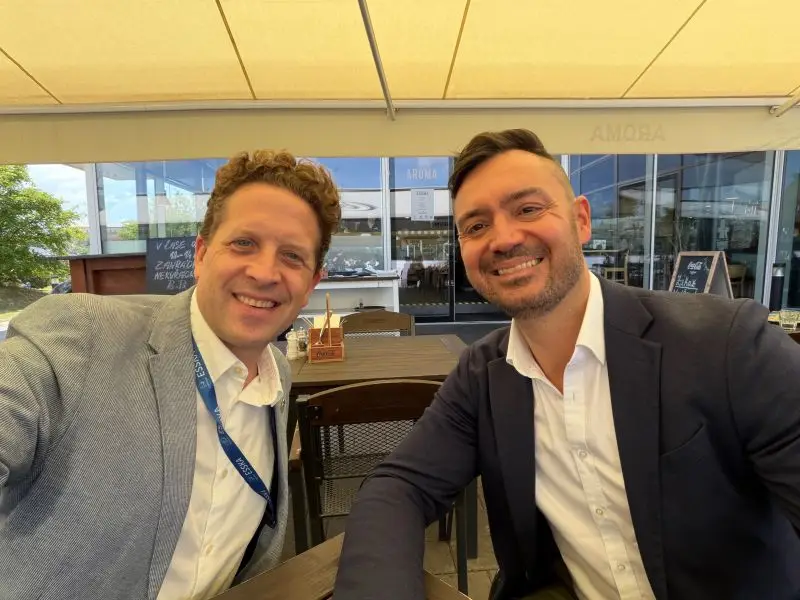
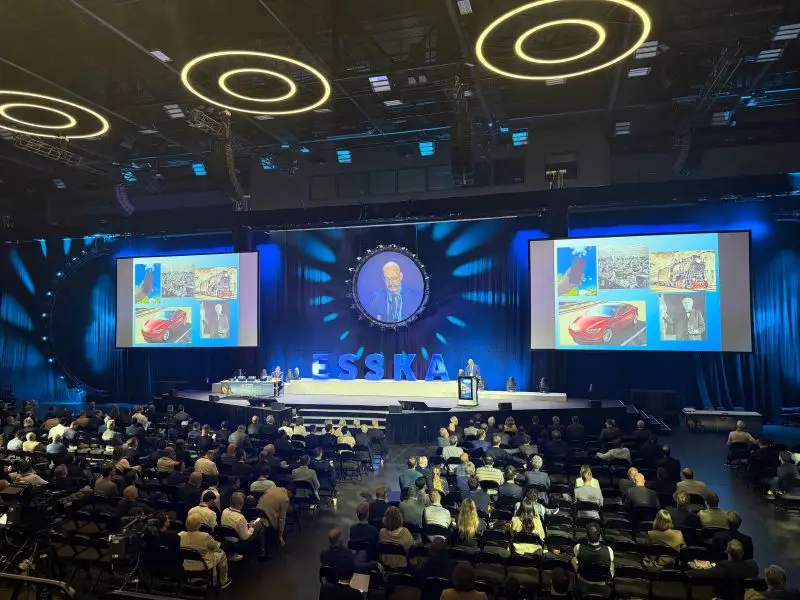
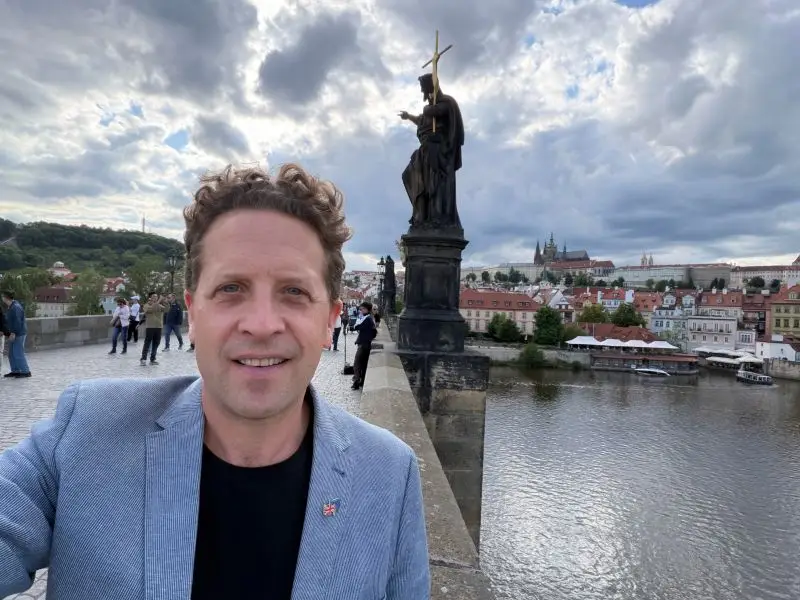
Recently, I had the privilege of attending the ESSKA (European Society of Sports Traumatology, Knee Surgery & Arthroscopy) Congress in Prague. As a Consultant Trauma and Orthopaedic Surgeon at Bristol Royal Infirmary and the Avon Orthopaedic Centre, these international conferences are invaluable for staying at the forefront of knee surgery innovation.
Prague brought together the world’s leading knee surgeons—trauma specialists, arthroscopy experts, and joint replacement pioneers. The energy was palpable. This wasn’t passive learning; it was genuine intellectual exchange where we challenged assumptions, discussed complications openly, and collectively advanced our understanding of knee care.
What struck me most was the breadth of innovation on display. In a single congress, I encountered breakthroughs ranging from regenerative medicine to cutting-edge surgical techniques that will directly benefit my patients at Bristol.
Why I Attend International Conferences
Working in isolation limits surgical practice. International conferences connect me with colleagues facing similar challenges across different healthcare systems, patient populations, and regulatory environments.
Informal conversations between presentations often yield the most valuable insights. A coffee break discussion about managing complex ACL reconstructions or unexpected complications provides perspectives I simply couldn’t access through journals or webinars alone.
These conferences also keep me intellectually engaged. After 15+ years as a consultant surgeon, continuous learning prevents complacency and maintains the professional vitality essential for delivering excellent patient care.
My Take Home Innovations from ESSKA Prague
I’m bringing several significant innovations back to Bristol:
Medial Partial Knee Replacement in Elderly Patients My research demonstrating excellent outcomes of medial unicompartmental knee replacement in patients over 80 has just been published in the Journal of Arthroplasty. This validates an approach many surgeons considered too risky for elderly cohorts. I’m now confidently offering this procedure to appropriately selected patients aged 80+, knowing outcomes rival younger cohorts.
International Research Collaboration ESSKA provided opportunities to develop multi-centre research programmes with colleagues from Sydney, Shanghai, and across Europe. These collaborations accelerate research productivity and ensure findings are globally relevant rather than geographically isolated.
Combined ACL Reconstruction with Lateral Tenodesis Novel approaches combining ACL reconstruction with lateral tenodesis show promise for complex knee instability patterns. I’m evaluating whether this technique suits my patient population.
3D Analysis for ACL Rupture Risk Three-dimensional tibial analysis can predict ACL rupture risk. This emerging technology may identify high-risk patients requiring targeted prevention strategies or modified rehabilitation approaches.
Modern Partial and Total Knee Replacement Designs Newer implant designs offer improved biomechanics and longevity compared to earlier generations. I’m selectively introducing designs demonstrating compelling evidence advantages for my specific patient cohort.
Artificial Intelligence in Knee Surgery AI applications in surgical planning, intraoperative navigation, and outcome prediction are advancing rapidly. Whilst I’m cautiously evaluating AI tools, those demonstrating genuine clinical benefit will enhance surgical precision and patient outcomes.
Joint Preservation Through Osteotomy Double-level tibial and femoral realignment osteotomies preserve native joints in younger patients with malalignment-related osteoarthritis. This joint-preserving approach delays or prevents future joint replacement.
Injectable Hydrogels for Cartilage Protection Modern injectable hydrogels like Arthrosamid offer promising early results for cartilage degeneration. As evidence accumulates, these may become standard adjuncts to surgical procedures for select patients.
Translating Conference Learning Into Patient Care
The key distinction between attending conferences and truly benefiting from them lies in critical evaluation. Not every innovation presented deserves adoption.
I evaluate each technique rigorously: Does the evidence genuinely support it? Does it apply to my patient population? What’s the learning curve? Can I implement it safely within my current practice?
I’ve integrated some techniques immediately—the medial UKA research validates what I’ve clinically observed. Others require careful consideration, additional training, or longer-term evidence accumulation before adoption.
My patients benefit from this measured approach. I’m not pursuing innovation for its own sake, but rather implementing evidence-based advances that genuinely improve outcomes.
Building Global Research Networks
Conferences strengthen collaborations that extend far beyond the event itself. Relationships forged in Prague with colleagues from international orthopaedic centres create opportunities for:
Joint publications addressing global orthopaedic challenges
Multi-centre trials with larger sample sizes and diverse patient populations
Knowledge exchange ensuring best practices disseminate globally
Mentorship of emerging researchers and younger surgeons
These networks ensure that excellent research isn’t confined to single institutions but rather amplified through collaborative efforts.
The Bottom Line
International conferences like ESSKA keep surgeons sharp, connected, and committed to evidence-based advancement. They remind us that orthopaedic surgery evolves through collective intelligence—no single surgeon, hospital, or country has all the answers.
For patients at Bristol Royal Infirmary and the Avon Orthopaedic Centre, my conference attendance translates directly into access to cutting-edge surgical innovations, carefully evaluated and responsibly integrated into clinical practice.
If you’re considering knee surgery, you deserve a surgeon who remains current with global innovations whilst maintaining rigorous evidence-based standards. Book a consultation at Bristol Royal Infirmary or Spire Bristol Hospital, and let’s discuss which evidence-supported approach best suits your specific knee condition.
Frequently Asked Questions
Why should I choose a surgeon who attends international conferences?
Conference-attending surgeons stay current with latest evidence and innovations. They connect with global experts, maintain intellectual engagement, and commit to continuous improvement—all directly benefiting patient outcomes.
Will I benefit from my surgeon's conference learning?
Absolutely. I carefully integrate proven innovations into clinical practice. My patients access cutting-edge techniques supported by rigorous evidence, improving outcomes compared to outdated approaches.
Is medial partial knee replacement suitable for patients over 80?
Yes. My research published in the Journal of Arthroplasty demonstrates excellent outcomes in patients 80+ comparable to younger cohorts. Age alone isn’t a contraindication if medical optimisation is achieved.
What's your approach to new surgical techniques?
I evaluate each innovation critically: is evidence compelling? Does it suit my patients? Can I learn it safely? Only techniques demonstrating genuine advantages reach my clinical practice.
How do international collaborations improve patient care?
Global research networks enable larger studies, diverse patient populations, and knowledge exchange ensuring best practices disseminate worldwide. Your care benefits from worldwide orthopaedic advancement.
