Sven Putnis offers expert revision knee replacement surgery in Bristol. Discover multidisciplinary care for implant loosening, wear, fractures, and infection.
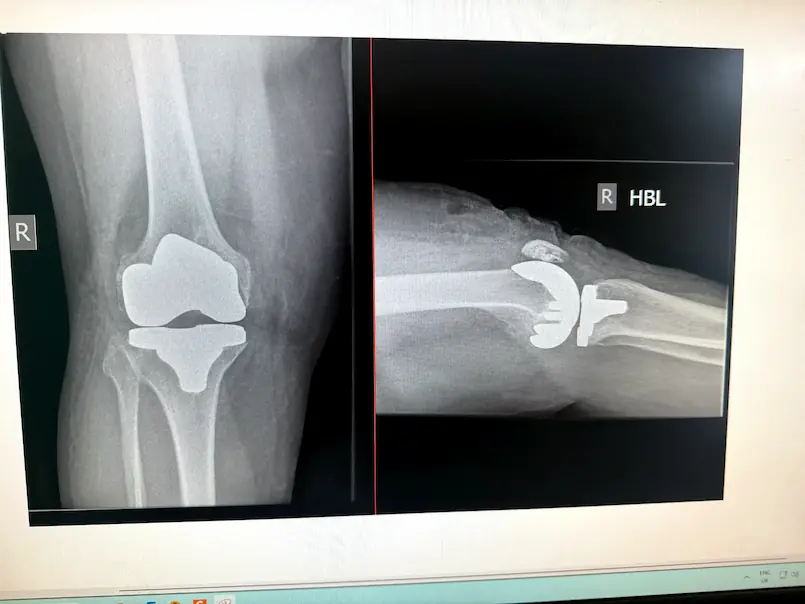
While primary knee replacements are exceptionally successful and durable, a small percentage of implants may fail over time, necessitating a second procedure known as a revision knee replacement. Revision surgery is significantly more complex than a primary joint replacement. It requires meticulous investigation to determine the exact cause of the failure—such as aseptic loosening of the components (without infection), progressive arthritis, periprosthetic fractures, or deep-seated infection. Sven Putnis approaches every revision case with rigorous clinical analysis, working closely within an expert multidisciplinary team to ensure the highest standard of care and the best possible outcome.
Who Is This For?
Usually the recovery closely follows that of a primary Total Knee Replacement.
Recovery is in phases:
Common signs of a failing knee replacement include a return of significant pain (especially pain that wakes you at night), noticeable swelling, a feeling of instability or the knee “giving way,” and a progressive loss of movement or stiffness. If you experience any of these symptoms, you should seek a specialist assessment.
Yes. Revision surgery is technically more demanding because the surgeon must carefully remove the old implant while preserving as much of the patient’s natural bone as possible. The surgery often takes longer, and the rehabilitation period can be more extensive than following a primary joint replacement.
Common signs of a failing knee replacement include a return of significant pain (especially pain that wakes you at night), noticeable swelling, a feeling of instability or the knee “giving way,” and a progressive loss of movement or stiffness. If you experience any of these symptoms, you should seek a specialist assessment.
This depends on the type of implant and the reason for revision surgery. A revision of a partial knee replacement to a total knee can closely follow that of a primary total knee replacement. While the outcomes of revision surgery are generally not quite as high as those of a primary replacement, the procedure is still highly successful at relieving pain and restoring function. Clinical studies indicate that the overall survival rate of a revision knee replacement is approximately 75% to 80% at ten years post-surgery 5.
If an infection is diagnosed, the treatment may need a “two-stage” revision. The first stage involves removing the infected implant and placing a temporary spacer loaded with antibiotics. You will then receive a course of intravenous antibiotics. Once the infection is completely cleared, a second surgery is performed to implant the new, permanent knee replacement. These complex cases are managed by a specialist regional multi-disciplinary team.
Hospital stays following complex revision surgery are typically slightly longer than for primary replacements. You can expect to stay in the hospital for 3 to 5 days, depending on the complexity of the surgery, your general health, and how quickly you progress with the initial physiotherapy on the ward.
Recovery Time
3–6 months (often longer than primary replacement)
Complexity
High (requires specialist multidisciplinary planning)
Book a consultation to discuss if this treatment is right for you.
Book your consultation today and begin your journey to recovery with expert knee care in Bristol.